
1899: The Boer War & Other Quebec Curios
Also known as the South African War, the cause of the Second Boer War’s beginnings depends on who you ask and when. For the British and the English-speaking Canadians of the time, it was a [read more]
Founded in 1884 by William-Edmond Blumhart, La Presse’s ideology at the beginnings of its publication was to be an independent newspaper. Independence, however, was relative. The paper’s beginnings and its position towards neutrality stemmed from [read more]
The story of residential schools is first and foremost a tragic one. Initially considered by both the Canadian government and leaders of the Plains Nations as something that would build the skills of children, residential [read more]
Not only the terminus of East End’s green line, Honoré Beaugrand was a person with quite the interesting life. A lifelong traveller and politician, Beaugrand’s family had been involved with the Parti Patriote raised Beaugrand [read more]
The game of speculation and the idea of putting things on risk at the chance of reaping great rewards have been central to the financiers of yesterday and today. The investors and businessmen of Montreal [read more]
A chance partnership at The Montreal Gazette of two men sparked the idea of a satirical magazine that eventually paved the way for the popular anglophone newspapers that dominated the noon day papers in Montreal [read more]
How did an Irishman become one of the Fathers of Confederation? The story begins, oddly enough, with a young man living in the United States. Thomas D’Arcy McGee originally immigrated to the United States during [read more]
Discussions for a confederation started in Charlottetown, when the Maritime colonies proposed their own union. After a series of governments swinging back and forth, the Province of Canada, composed of Canada West (formerly Upper Canada) [read more]
Problems existed almost from the very beginning of the Province of Canada’s new system of government. It seemed to achieve not only the semblance of a democratic system but also the gradual assimilation of the [read more]
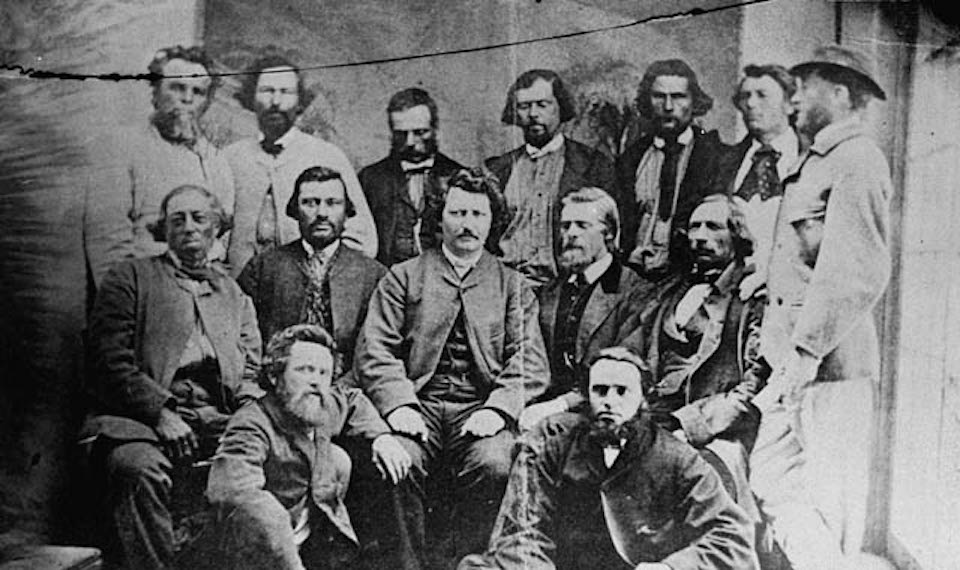
In 1858, a young man arrived in Montréal, unknown to many but a select few who had seen his potential as a scholar back in Manitoba. This man, Louis Riel, was supposed to become a [read more]
The concept of the Underground Railroad had existed since the late eighteenth century but it was only until the 1830s when its name, part of a code for interested peoples to communicate with each other, [read more]
Quebec was the last province in a post-Confederation Canada that granted women a right to vote, in 1940 to be exact, but the story of how that happened is another story for another time. The [read more]
The effects of the 1837-8 Rebellions when the Canada East and Canada West were still Upper and Lower Canada respectively ran deep, and in some regards, it seemed that some of the remaining underlying prejudices [read more]
Part of the reason why La Fontaine and his team were successful in obtaining responsible government in 1848 was due to the arrival of Lord Elgin the previous year. La Fontaine had resigned a few [read more]
Papineau’s return to Canada East and subsequent runs for politics did not go unnoticed and while his influence was no longer that of his glory days during the 1830s, he still had a reasonable amount [read more]
After being granted amnesty in 1845, Louis-Joseph Papineau returned to the Province of Canada but found it changed from the climate that he had left it in. After his flight to the United States in [read more]
Grosse-Île was established in the early 1830s to contain immigrants that the Lower Canadian government believed were responsible for causing a cholera epidemic. It was later transferred to the powers of Lower Canada’s higher authority, [read more]
On the heels of the Durham Report, the British government took some of Lord Durham’s ideas into consideration and in 1840 created a new province, the Province of Canada, through the Act of Union. The [read more]
Copyright © 2025 | Montreal Rampage